


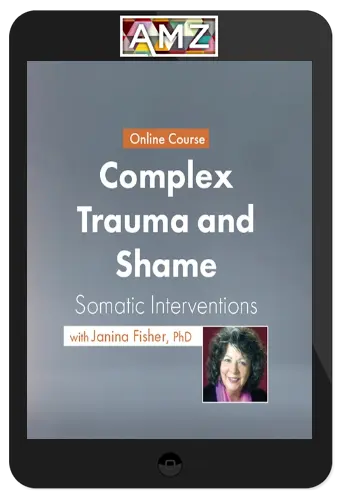
Janina Fisher – Complex Trauma and Shame: Somatic Interventions
Original price was: $48.99.$24.00Current price is: $24.00.
»Instant Delivery
Janina Fisher – Complex Trauma and Shame: Somatic Interventions
Complex Trauma and Shame: Somatic Interventions course will make even your most complex trauma clients easier to treat…
World-renowned trauma expert and author Dr. Janina Fisher developed a comprehensive online training course — specifically for fellow clinicians like you — that’s filled with today’s most effective somatic interventions for treating complex trauma.
These body-oriented interventions, which are based on sensorimotor psychotherapy, directly address the underlying causes of post-traumatic stress to help clients break free from past trauma and thrive in life.
In Complex Trauma and Shame: Somatic Interventions course, you’ll see compelling, real-life in-session videos of the interventions and techniques in practice, plus you’ll learn the underlying neuroscience that explains how and why they are effective — to help you better assess trauma symptoms and improve your treatment plans.
What you’ll learn in Complex Trauma and Shame: Somatic Interventions
In-Session Video 1: Working with Somatic Components to Overcome Trauma Related Fears of Feeling Good
Janina’s client feels ready for a relationship but paralyzed by an inability to express positive feelings. Years of talk therapy have given her insight into this pattern as a legacy of early childhood trauma — without resolving it. During the session, Janina and the client notice shoulder twitching each time something positive is mentioned. Assuming that the shoulder is communicating specific beliefs or fears that can be addressed through internal dialogue, Janina uses somatic interventions to ‘befriend’ the shoulder, explore the fears it warns about, and guide the client towards relaxation.
Bonus In-Session Video
In-Session Video 2: Steps Toward Healing Traumatic Attachment & Borderline Personality Disorder
In this session, Janina’s client is a 22-year-old mother of two, diagnosed with borderline personality disorder, who wants to work on stabilizing a volatile relationship to the father of her children and learn to manage her rage and impulsivity. Adopted at 18 months after being removed from her abusive parents’ care, she has always exhibited classic signs of traumatic attachment: separation anxiety, fear of abandonment, rejection sensitivity, fight and flight responses to disappointment or betrayal — and equal difficulty tolerating distance and closeness. In this session, healthy attachment to her children is used as a resource to help her gain insight, develop control over impulsive behavior, and facilitate internal compassion and self-soothing.
More courses from the same author: Janina Fisher
Related products

»Instant Delivery

Total sold: 1

»Instant Delivery

»Instant Delivery
Sixty Skills – Developing Clairvoyance, Clairaudience and Clairgustance

»Instant Delivery

»Instant Delivery

»Instant Delivery
Marnie Greenberg – Pre-Program Your Life For Health, Wealth & Happiness

»Instant Delivery