



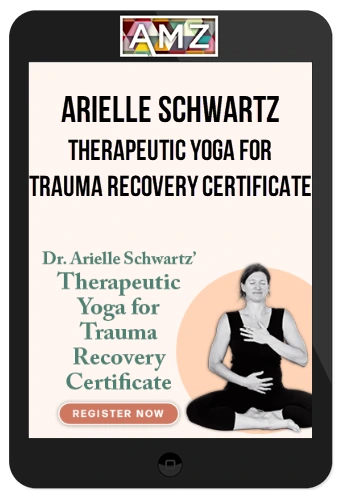
Arielle Schwartz – Therapeutic Yoga for Trauma Recovery Certificate
Original price was: $199.99.$90.00Current price is: $90.00.
»Instant Delivery
Arielle Schwartz – Therapeutic Yoga for Trauma Recovery Certificate
Expand your practice and empower deep healing with the only trauma-informed yoga certificate designed for mental health professionals.
Inside this yoga for clinicians certificate course, you’ll learn how to:
- Confidently introduce trauma-informed yoga therapy into sessions—with clear guidance on informed consent, boundaries, and trauma sensitivity
- Increase clients’ body awareness and emotional regulation with no-touch somatic tools
- Support nervous system balance with polyvagal-informed breathing, movement and postures
- Structure start-to-finish therapeutic yoga sessions that target each client’s unique goals
- Integrate techniques from parts work, EMDR, and more
What you’ll learn in Therapeutic Yoga for Trauma Recovery Certificate
Part 1: Foundational Skills
- Module 1 — Treating Trauma Through the Body
- Discover how somatic psychology reframes trauma as something the body can both carry and release.
- Key Takeaways
- View trauma on a continuum so you can treat the whole story
- Zero in on deep-rooted attachment wounds from childhood and developmental trauma
- Expand your lens to work with legacy burdens and intergenerational trauma
- Understand the impact of cultural, systemic, and ancestral weight in collective trauma and collective memory
- Tailor your approach to PTSD, C-PTSD, and dissociative symptoms
- Demonstrations & Experiential Exercises
- What awakens you, Playing with Stillness, Your Resiliency Factors, Prayer hands, Grounding blanket
- Module 2 — The Integration of Clinical Trauma Recovery Models & Yoga
- See how the 8 limbs of yoga align with phase-based trauma recovery for safe, structured healing.
- Key Takeaways
- Get grounded in a phase-based approach to trauma recovery
- Explore the 8 limbs of yoga through a trauma-informed lens
- Assess clients’ self-relationship with the Watts Connectedness Scale
- Hold ‘sacred’ space for your clients’ sense of meaning—without crossing into religious territory
- Harness mindfulness to help clients shift from reactivity to regulation
- Understand trauma as a value-based search for meaning and learn how to help clients rewrite their narratives with depth, dignity, and purpose
- Demonstrations & Experiential Exercises
- Integrating Values into Daily Life
- Module 3 — Somatic Therapy, Polyvagal Theory, and Interpersonal Neurobiology for Trauma Treatment
- Learn to read the nervous system in real time and guide clients toward safety and connection.
- Key Takeaways & Skill Acquisition
- Polyvagal theory to help clients navigate between states of activation and rest
- Learn how to co-regulate effectively
- Tune into subtle cues around boundaries so you can adjust your presence and pacing
- Turn therapeutic ruptures into moments of growth and reconnection
- Use compassion-based practices that help clients move through internal blocks
- Demonstrations & Experiential Exercises
- Co-Regulation, 4 Embodied Self-Compassion practices, 5-point check-in for starting session, Shy Blanket, Proximity Awareness
Part 2: Clinical Application
- Module 4 — Neuroplasticity & Natural Vagus Nerve Stimulation in Trauma Recovery
- Rewire the nervous system and build resilience with breathwork, movement, and Polyvagal-informed practices.
- Key Takeaways
- Understand how to harness neuroplasticity to create change
- Work with heart rate variability (HRV) as a marker of regulation and resilience
- Support clients’ in building a more flexible, responsible nervous system through vagal tone
- Create relational safety with client-centered practices from Deb Dana’s polyvagal work
- Demonstrations & Experiential exercises:
- Gratitude, Balanced Breathing, Humming
- Module 5 — Integrate Mindful Movement and Stillness in Trauma-Informed Yoga
- Master trauma-sensitive yoga, posture, and movement to activate safety, release tension, and rebuild nervous system resilience.
- Key Takeaways
- Explore how gentle myofascial release can unlock stored emotions
- Use bilateral movements to enhance brain integration
- Introduce dual awareness practices that bridge inner and outer experience
- Restore stability with spinal movements, seated grounding, and power poses
- Support vestibular integration with wall presses and balance-based exercises to
- Promote reflex integration and reset the body’s natural rhythms with rhythmic motions like cat-cow, twists, and rocking
- Offer deeply calming restorative yoga poses allowing for nervous system repair
- Demonstrations & Experiential exercises
- Wall Press & Boundary Awareness, Reflex Integration for nervous system health, Settling into stillness, Restorative Stillness
Part 3: Yoga Therapy in Practice
- Module 6 — Start-to-Finish Structuring of Trauma-Informed Yoga Sessions
- Design inclusive, trauma-sensitive yoga sessions that expand regulation and connection for clients of all abilities.
- Key Takeaways
- Adapt your approach for clients with a range of abilities, backgrounds, and histories
- Master the art of using invitational language instead of commands
- Know how to respond to emotional overwhelm with grounding and support
- Use somatic movement to help clients expand their ability to experience and regulate emotional states
- Apply parts work on the yoga mat to help clients navigate inner conflict
- Demonstrations & Experiential exercises:
- Build Affect and Sensation Tolerance, Working with Somatic Tension, Mindful Movement, Finding your voice
- Module 7 — Practical Considerations When Doing Trauma-Informed Yoga
- Gain confidence integrating trauma-informed yoga with safe, ethical, adaptable session design ‐ in person or telehealth.
- Key Takeaways
- Set up your virtual or in-person office that supports relaxation, openness, and body awareness
- Feel confident with informed consent
- Use screen tools effectively to ensure clients are safe to participate
- Set and maintain clear boundaries, especially around physical touch
- Create clear documentation that collaborative care teams can understand
- Set clear goals and intentions for each therapeutic yoga session
- Module 8 — In-Session Demonstrations of Therapeutic Yoga for Trauma Recovery
- Sit alongside Dr. Schwartz as she guides you through three yoga-therapy sessions with differing clients. You’ll see how to navigate common and uncommon challenges to doing therapeutic yoga both online and in-office.
More courses from the same author: Arielle Schwartz
Related products
»Instant Delivery
»Instant Delivery
Total sold: 1

»Instant Delivery
Spartan – Apex Warrior: Increase Your Physical and Mental Strength, Build Muscle Subliminal

»Instant Delivery

»Instant Delivery
Talmadge Harper – Extreme Fitness Motivation And Results For Women

»Instant Delivery

»Instant Delivery
Total sold: 1

»Instant Delivery