

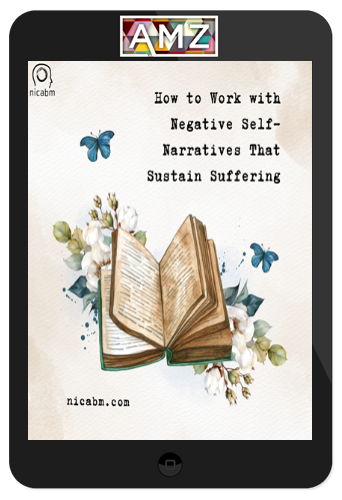
NICABM – How To Work With Negative Self-Narratives That Sustain Suffering
Original price was: $97.00.$49.00Current price is: $49.00.
»Instant Delivery
NICABM – How To Work With Negative Self-Narratives That Sustain Suffering
What you’ll learn in How to Work with Negative Self-Narratives That Sustain Suffering:
How to Work with Rigid Self-Narratives That Clients Feel Powerless to Change
Michael Yapko, PhD Shelly Harrell, PhD
Christine Padesky, PhD Melanie Greenberg, PhD Bill O’Hanlon, LMFT
- An Experiential Exercise to Help Broaden the Scope of a Client’s Narrative
- A Mindfulness-Based Approach to Help Clients Envision Themselves Untethered from a Rigid Narrative
- How to Skillfully Help Clients Understand the Costs of Their Rigid Narratives (and the Benefits of Rewriting It)
- One Strategy to Use When Clients Revert Back to a Harmful Narrative (Even After Making Some Initial Progress)
How to Work with Trauma-Based Self-Narratives
Bessel van der Kolk, MD Stephen Porges, PhD
Bonnie Goldstein, PhD Deany Laliotis, LICSW Rick Hanson, PhD
- One Specific Consequence of a Trauma-Based Narrative (and Psychoeducation That Can Help Deflect It)
- A 3-Step Process to Work with Trauma-Based Narratives That Make Suffering a Self-Fulfilling Prophecy
- How to Help Clients Step into a New Narrative (Even After Trauma Made It Feel Impossible)
How to Work with Self-Narratives That Are Tied Directly to a Diagnosis
Lynn Lyons, LICSW Ron Siegel, PsyD
Bill O’Hanlon, LMFT Judson Brewer, MD, PhD Kelly McGonigal, PhD
- Why More Clients Are Taking on Diagnoses as Part of Their Identity
- Practical Strategies to Create Distance Between Your Client’s Identity and Their Diagnosis
- The Specific Costs of Having an Identity That’s Bound Too Tightly to a Diagnosis
- Why Some Clients Cling to a Diagnosis-Based Identity (Even After They’re Aware of the Harmful Consequences)
Strategies to Help Clients Create More Positive Self-Narratives
Steven Hayes, PhD Peter Levine, PhD
Christine Padesky, PhD Kelly McGonigal, PhD Judson Brewer, MD, PhD
- How Small Action Steps Can Help Create a More Positive Narrative (and a 5-Step Process to Help Clients Begin Making Those Steps)
- Why Reward-Based Learning Can Be Uniquely Suited to Help Rewrite Harmful Narratives
- Mindfulness Research That Can Help Direct Your Work in Shifting a Client’s Narrative
- One Strategy to Help Clients Write a More Positive Story About Their Future
A Parts Approach to Address Conflicting Self-Narratives
Richard Schwartz, PhD Dan Siegel, MD David Wallin, PhD
- How to Help Clients Make Sense of Multiple Narratives Competing for Dominance
- An Internal Family Systems Approach to Help Mediate Between Conflicting Narratives
- Case Study: How to Uncover and Work with a Client’s “Sub-Narratives”
Important Precautions for Working with a Client’s Self-Narrative
Miguel Gallardo, PsyD Deany Laliotis, LICSW
Zindel Segal, PhD Pat Ogden, PhD
- Specific Missteps That Can Push Clients Deeper into Their Narratives (and How to Avoid Them)
- How to Balance Between Invalidating and Over-Validating a Client’s Narrative
- Strategies to Help You Remain Calm and Effective When a Client’s Narrative Feels Overwhelming
- One Critical Assumption About Self-Narratives to Avoid
Strategies to Untangle the Origins of Your Client’s Painful Self-Narrative
Steven Hayes, PhD Deany Laliotis, LICSW Melanie Greenberg, PhD
Judson Brewer, MD, PhD Kelly Wilson, PhD Ron Siegel, PsyD
Rick Hanson, PhD
- Questions to Help Pinpoint the Origin of a Client’s Narrative
- Why the Specific Details of a Client’s Narrative are So Important to Uncover (and Practical Steps that Can Help)
- How to Determine If Your Client’s Seemingly Helpful Narrative Is Actually Holding Them Back
How to Work with Self-Narratives That Threaten to Derail Relationships
Terry Real, MSW, LICSW Stan Tatkin, PsyD, MFT
- How to Work with Attachment-Based Narratives That Wreak Havoc on Relationships
- Strategies to Tease Apart Narratives That Drive a Wedge Between Couples
- How to Work with Couples Who Bring Conflicting Narratives to Therapy
- One Challenge of Treating Harmful Narratives That Is Often Heightened in Couples Work
More courses from the same author: NICABM
Related products

»Instant Delivery

»Instant Delivery
»Instant Delivery

Total sold: 1
»Instant Delivery
Sixty Skills – Training the Four Elements (Fire, Air, Water and Earth)
»Instant Delivery
Sixty Skills – Transference of Consciousness and the Grain of Sand
»Instant Delivery
Daniel J. Fox – Antisocial Borderline Narcissistic and Histrionic
Total sold: 1

»Instant Delivery